Teardown · e-bike drivetrain
Two motors, one gearset, no gears to shift.
Some e-bike mid-drives replaced the derailleur with a planetary gearset and a second motor. Nothing clicks into place, nothing steps — the ratio just slides. Build that gearset one part at a time, then drive it yourself.
Drive it
Readout
Presets & view
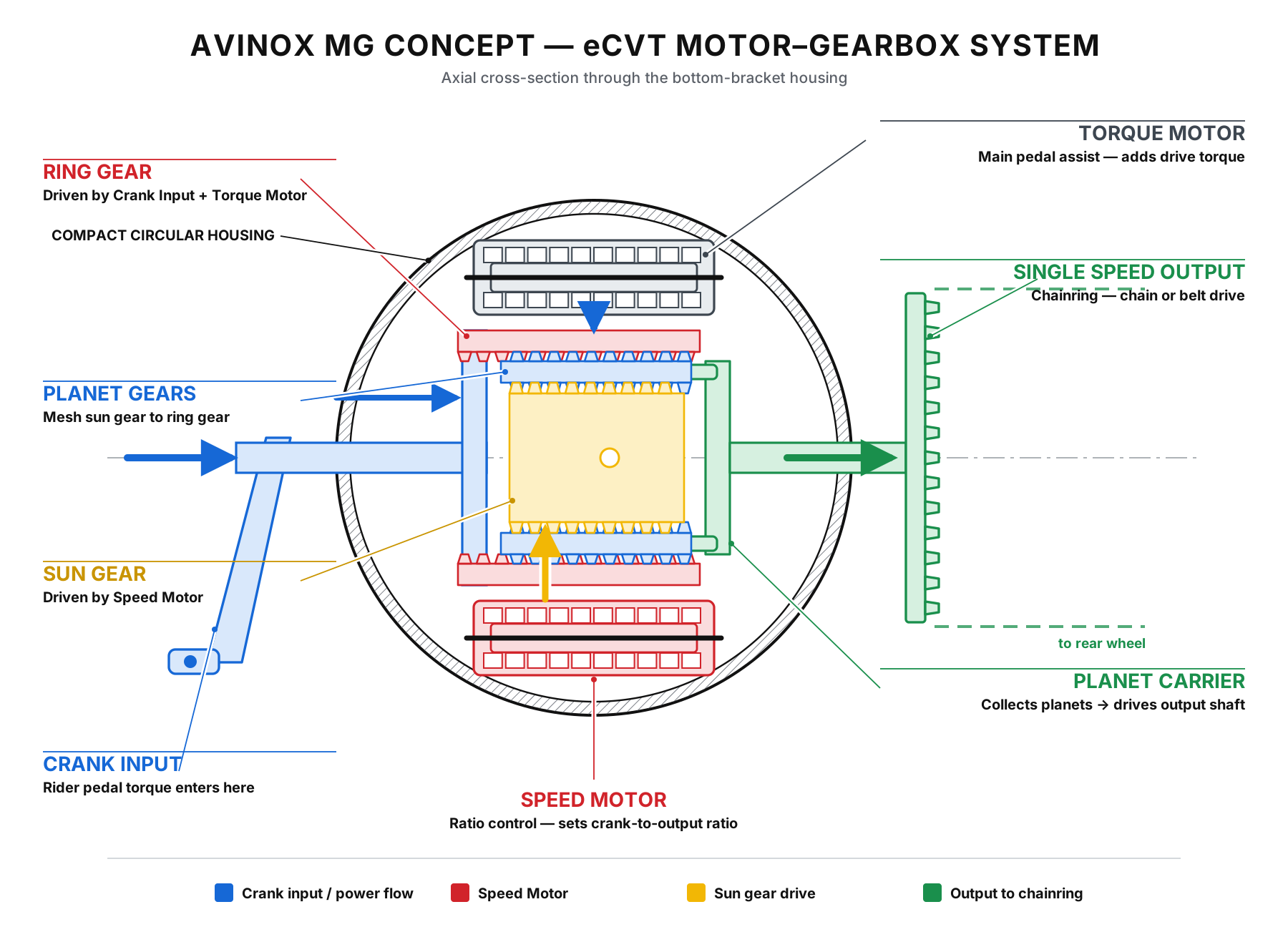
Every coloured part in the model is clickable. Blue parts turn at your pedalling speed, red/amber parts belong to the Speed Motor control path, green parts are the output to the rear wheel.
A motor is happy at one speed. A hill is not.
Electric motors make their best torque and efficiency in a narrow speed band. Riders don't ride in a narrow speed band — you crawl up a fire road at 40 rpm and spin along the flat at 95 rpm.
A derailleur solves this by physically moving the chain between sprockets: discrete steps, a moment of no drive, and a mechanism that hates being shifted under full load — exactly the moment a mid-drive is pushing hardest.
An eCVT solves it differently. The chainline never changes. The ratio between your cranks and the chainring is set electronically, by how fast a second motor spins one gear.
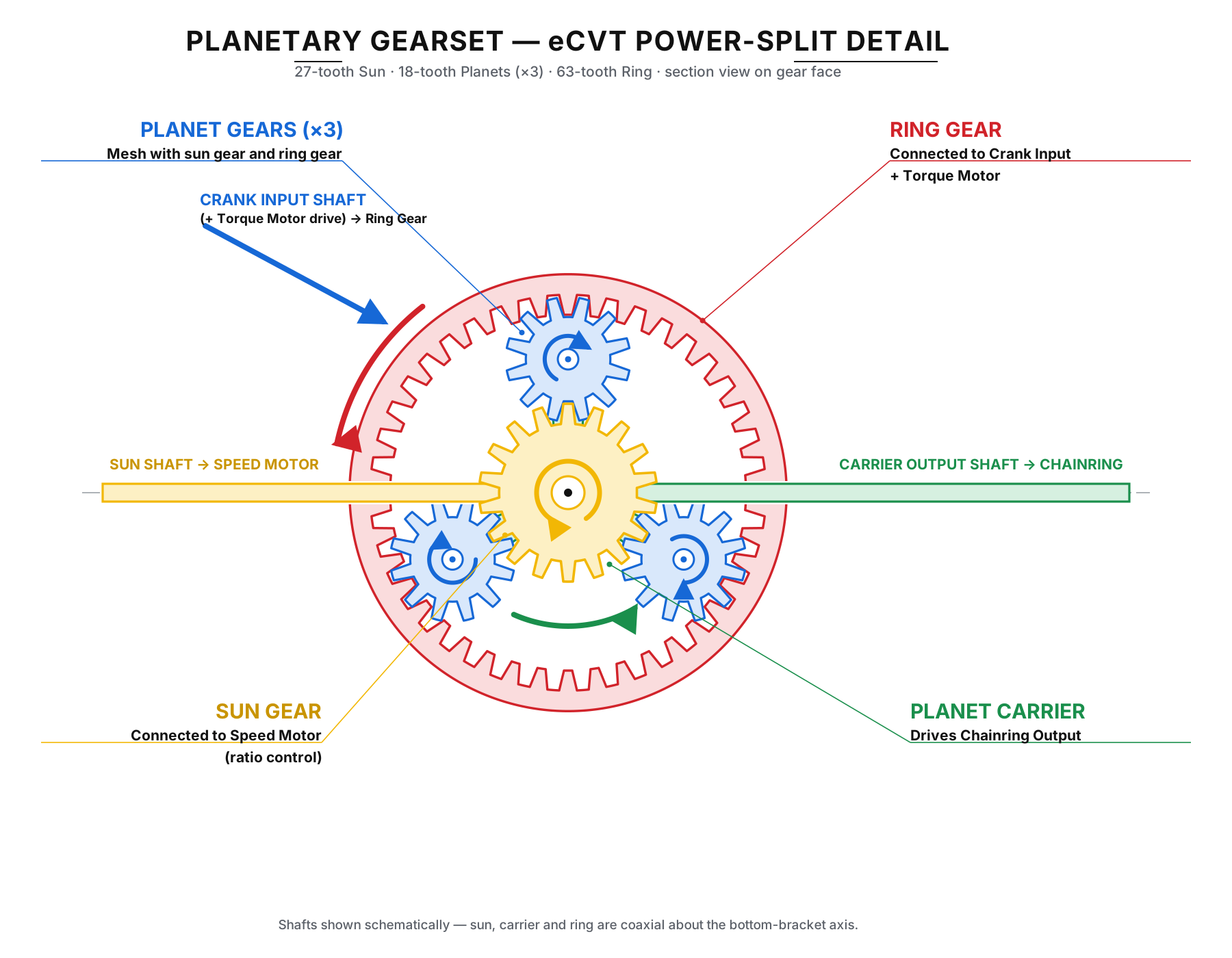
One planetary gearset has three shafts.
That is the whole trick. A planetary set gives you three concentric connections — ring, sun, carrier — and their speeds are locked together by one linear equation. Drive any two, and the third is decided for you.
Ring gear
Bolted to your crank spindle. It always turns at pedalling speed. The Torque Motor adds its assist here too.
Sun gear
Driven by the Speed Motor. This is the shifter — not a lever, just a commanded speed.
Planet carrier
The plate carrying the three planet pins. Whatever speed it turns, the chainring turns.
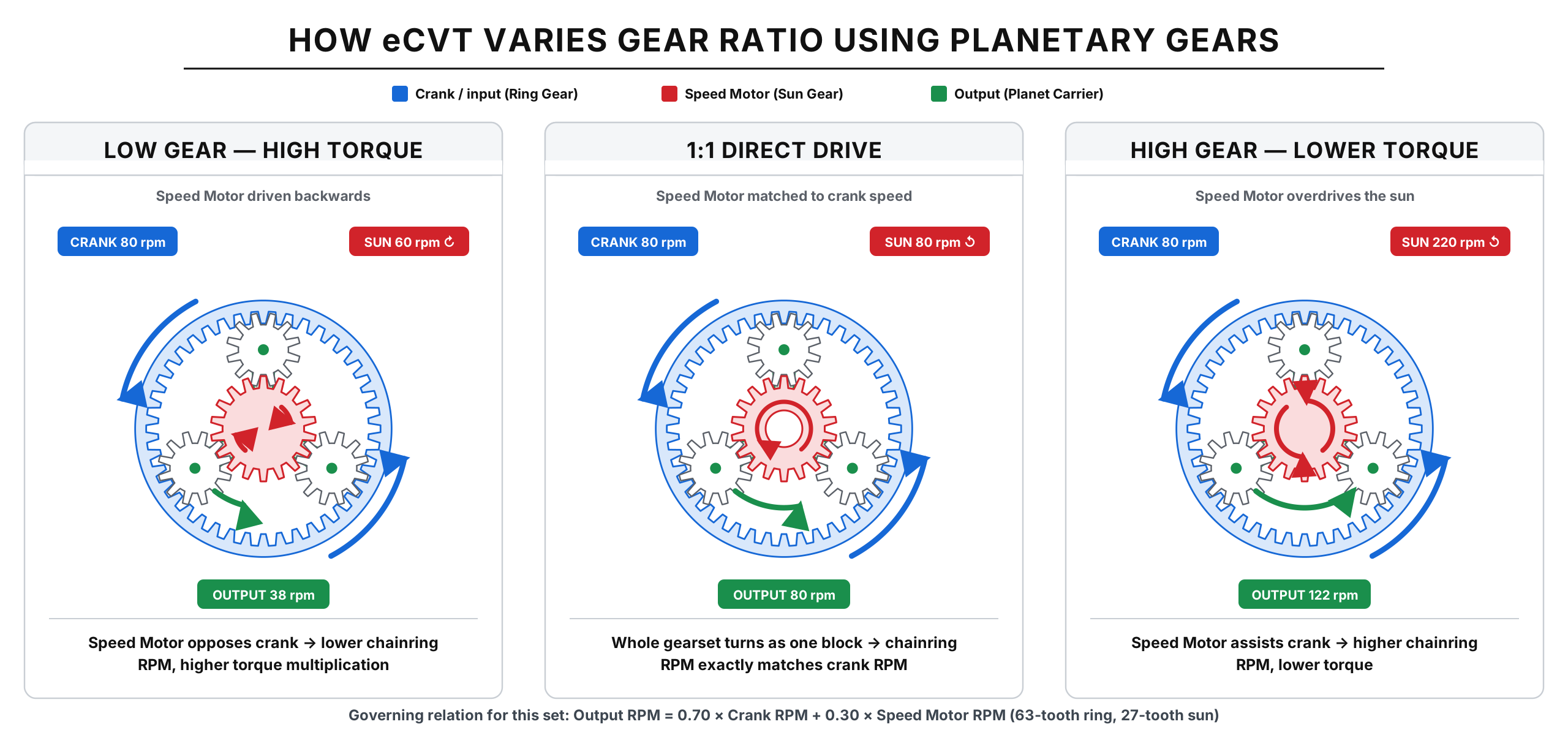
Chainring rpm = 0.70 × crank rpm + 0.30 × sun rpm
The two weights come straight from the tooth counts: 63 ÷ (63+27) = 0.70 for the ring, 27 ÷ (63+27) = 0.30 for the sun. Bigger ring, smaller sun, and your legs have more say in the answer. That single line explains every behaviour on this page — try substituting numbers into it while you move the sliders above.
Four things the Speed Motor can do.
Keep your pedalling at 80 rpm and read what happens to the chainring. Each row sets the model.
| Speed Motor | Chainring | What the rider feels | |
|---|---|---|---|
| −60 rpm backwards | 38 rpm | Low gear. The chainring turns at half your cadence, so torque at the chainring is roughly doubled. Climbing. | |
| +80 rpm matched to crank | 80 rpm | Direct drive. Ring, sun and carrier all turn together, the gearset locks solid and nothing inside it is sliding. | |
| +220 rpm overdriving | 122 rpm | High gear. The chainring outruns your legs by half again. Torque drops by the same proportion. Flat-out on the road. | |
| −187 rpm the exact opposite | 0 rpm | Neutral. You are still pedalling, the gears are all still moving, and the chainring is dead still. No clutch involved. |
Nothing in that list is a "gear". There are no steps between the rows — every sun speed in between is equally valid, which is what the CVT in eCVT means. In a real bike you never command the sun directly; you ask for a cadence or a support level, and the controller solves that same equation backwards to decide what the Speed Motor should do.
Speed is free. Torque is not.
Gearing down multiplies torque, and a planetary set is no exception: at half output speed you get roughly double output torque. But the ring, sun and carrier torques are also locked to each other by the tooth counts — and they don't care which direction power is flowing.
In low gear the sun is turning backwards while the gearset pushes it forwards. Power flows into the Speed Motor. It is generating, not driving, and that recovered electricity is what feeds the Torque Motor.
That recirculating loop is the real engineering story of an eCVT. It's why these systems are quiet and stepless, and also why they lose a few percent of efficiency compared with a chain sitting on a well-chosen sprocket.
Every ratio you ask for is paid for in watts moving between the two motors.
Three questions.
Work them out on the model before you open the answer.
You stop pedalling but the Speed Motor keeps spinning at 220 rpm. What does the chainring do?
0.70 × 0 + 0.30 × 220 = 66 rpm. The bike still drives — the sun alone can turn the output. This is how such a system can offer a throttle or walk-assist mode with no pedalling at all.
Why does the ring gear get a weight of 0.70 and the sun only 0.30?
Because the carrier speed is the tooth-count-weighted average of the two: the ring has 63 teeth and the sun 27, out of 90 total. The bigger gear has more influence over where the planets end up. Change the tooth counts and you change the character of the whole transmission.
The Torque Motor spins twice as fast. Does the bike change gear?
No. The Torque Motor is geared to the ring, which is tied to your crank — if it sped up on its own, it would just be pedalling for you. It sets how much force goes in, not the ratio. Only the sun speed relative to the crank speed decides the ratio.
The same machine, flat.
What this model simplifies.
The tooth counts here (63/27/18) keep the arithmetic readable — the same 0.70/0.30 weights as ever — while also being an engineering-valid set: no undercut, assembly conditions satisfied, standard 20° involute teeth. The model on this page is engineering-grade geometry: true involute flanks, exact mesh phasing, and non-interpenetration verified by a 63-check harness — see the engineering spec; the badge on the model runs a live subset of the checks. The Speed Motor is drawn coaxial with the sun and the Torque Motor drives the ring through a single pinion; real units route these through additional reduction stages and package them very differently. Losses, freewheels, sensors and thermal limits are still left out.