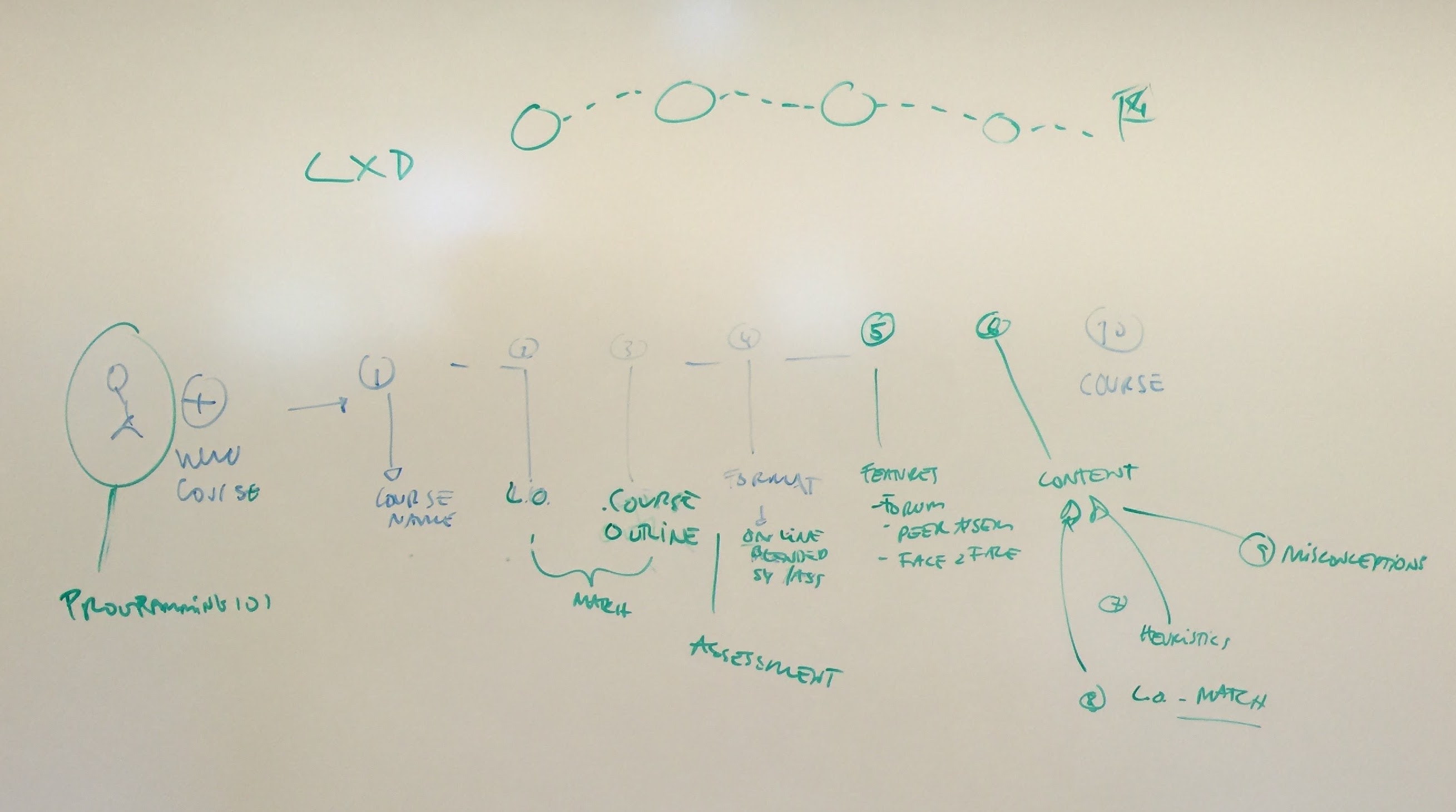
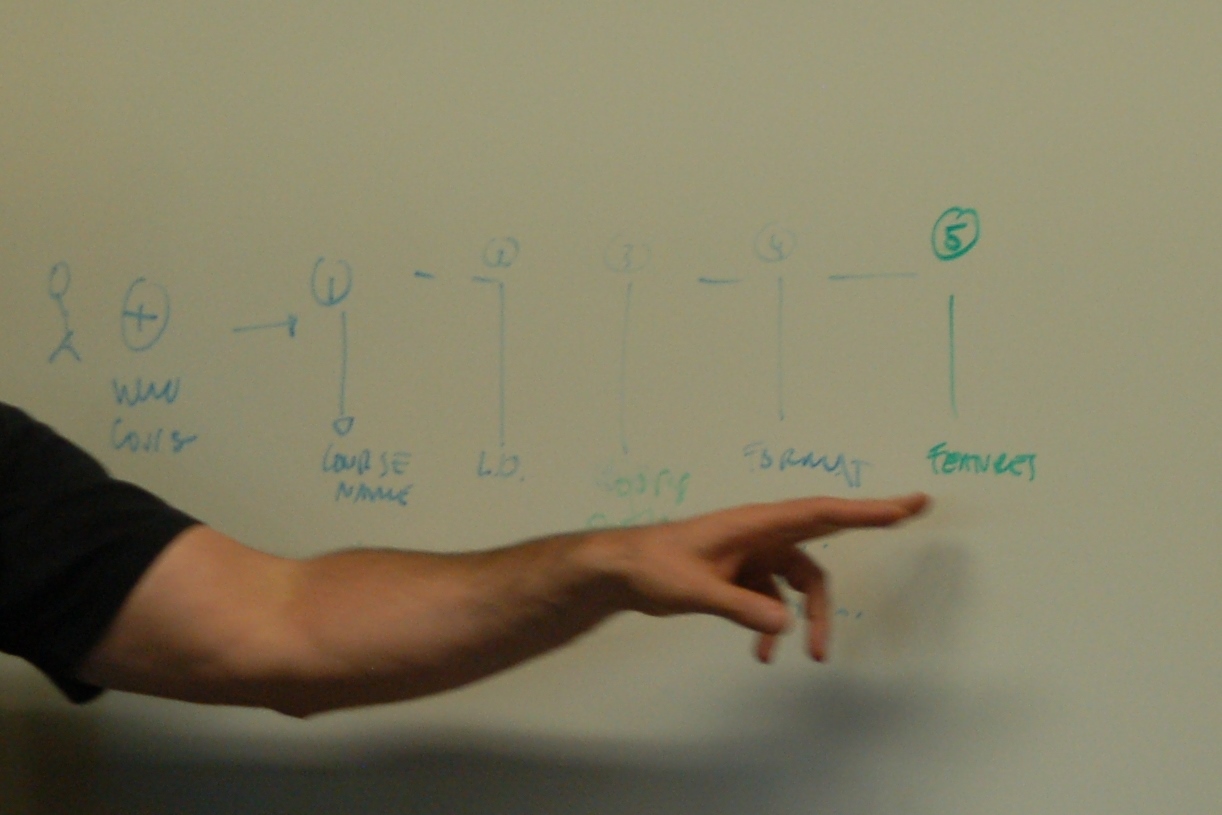
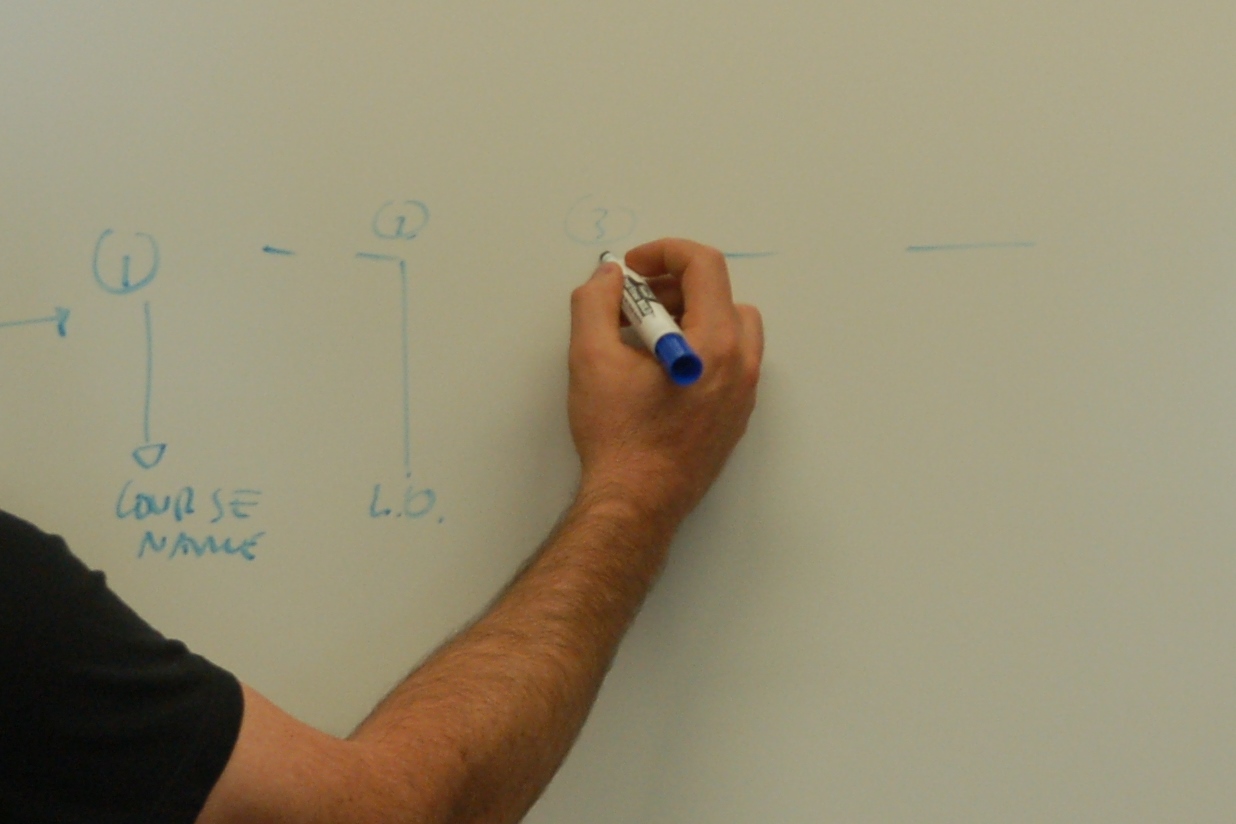
Thinking how might I construct a framework to help create blended courses… looking at the core loop of this solution:


Thinking how might I construct a framework to help create blended courses… looking at the core loop of this solution:
Moving along well in the internship. Talking quite a bit with Grace about instructional design, the challenges professores have, limitations and strengths of the platforms, and possibilities for future collaboration. Talked about my Master’s project and getting more involved in an actual course planning process. Good stuff.

Talked about Learning Module Design, the Understand Phase (benchmark tests and initial cognitive analysis).
With my resume updated, new website look, new about me page, and updated LinkedIn profile, I went to the EdSurge job fair to see learn a little more about the job market and companies around here. Some interesting companies:

Went again to BEAM (ex-Career Development Center) today to consult with them about my resume and onilne profile. Great advice that resulted in a new version of my resume and website’s new look 🙂
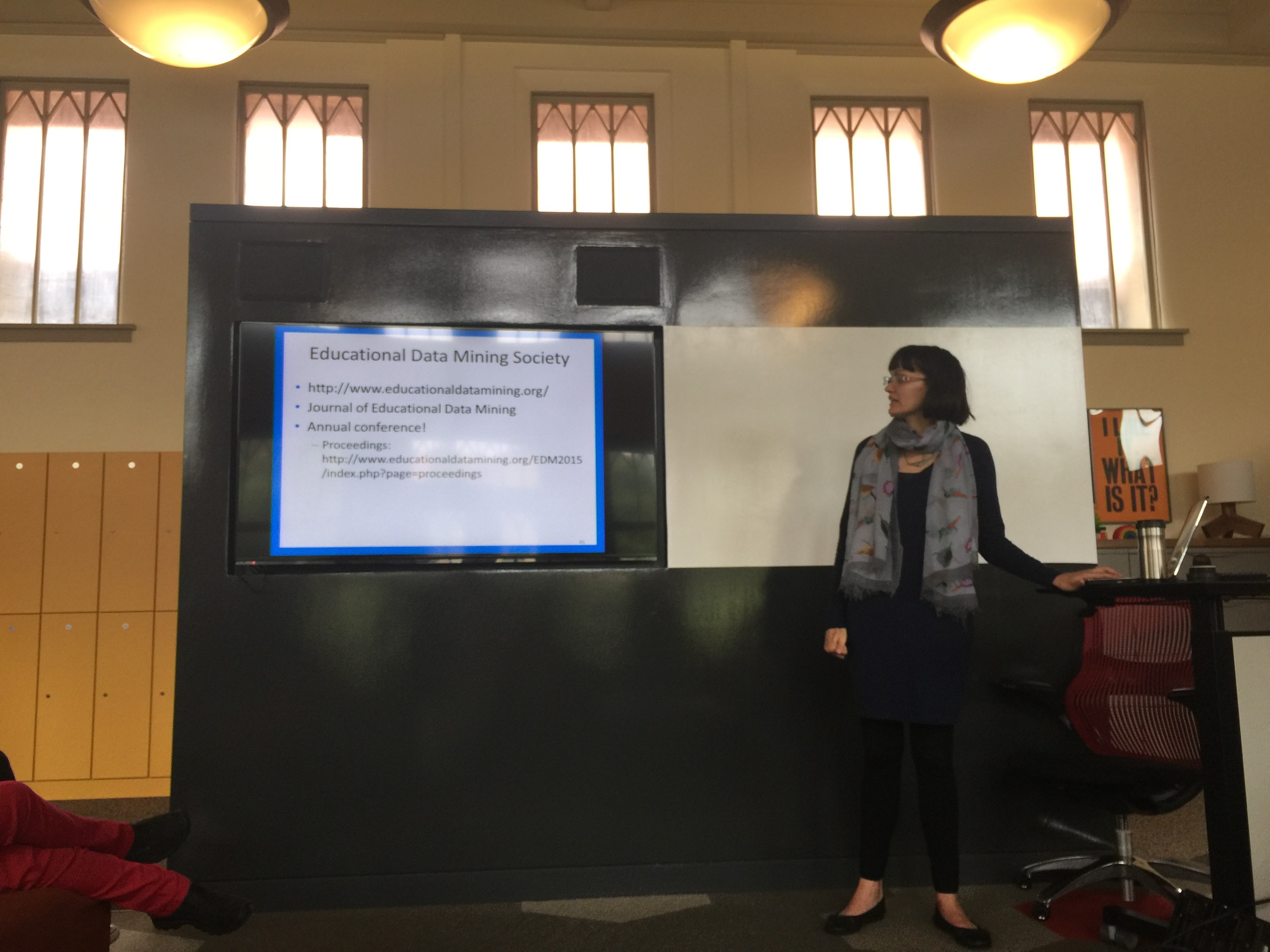
Had a great presentation today on Machine Learning – the first of a series of 3 sessions -by Iris Howley. We went over the basic types of machine learning such as supervised and unsupervised learning as well as styles:
This week Izabel Fonseca, also a Lemann Fellow, presented her research to get some feedback. She presented one of her research topics: socio-economic factors associated with the transition from colleges to the labor market.
Was very interested in the concept of indexing higher education institutions in terms of how much better off a student might be after they graduate – how “much bang for the buck” would a student get from investing time and money in a certain institution.
Met with James and Camila about this class’ final project – which will be my Master’s project. Discussed what were the interventions I imagined we could do with the instructors and we all seemed to agree with what could be done.
While we were in the meeting, we were ‘visited’ by a photographer who wanted to take some pictures of the classroom we were in.
Later on I received an email from her 🙂
Hello,
Yesterday I wandered into a classroom and took a couple of pictures of you talking about course design. I work at Stanford in the VPGE office, and I also (on the side) write a blog about graduate education. I am working on a post related to a newly released study about the value of teaching development activities for grad students (lsfss.wceruw.org). My blog is here: http://gradlogic.org
I wanted to know whether it was ok to use one of these photos. Your face isn’t shown. I may also want to use them later, but only if it is ok with you.
Thanks,
Chris M. Golde
chris@golde.org
GRAD | LOGIC blog
Helping graduate students navigate the ups and downs of graduate school
http://gradlogic.org
Reading:
Ambrose, S. A., Bridges, M. W., DiPietro, M., Lovett, M. C., & Norman, M. K. (2010). How learning works: Seven research-based principles for smart teaching. John Wiley & Sons.
Summary:
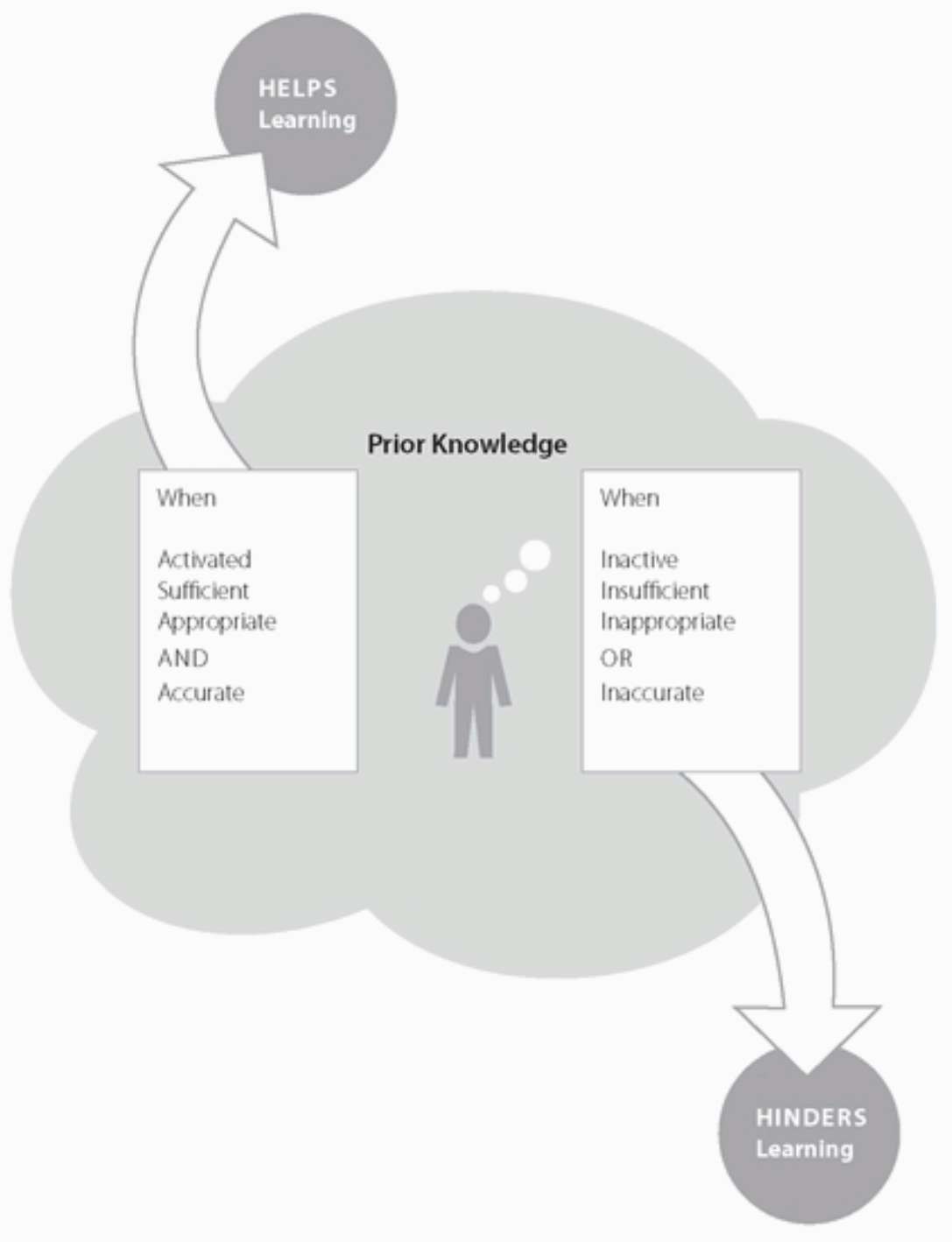
The first chapter illustrates how Prior Knowledge can affect learning both positively and negatively. When dealing with counterituitive concepts especially, common misconceptions that root from inacurate Prior Knowledge, are very hard to change and require time, cognitive energy, and an attentive teacher to scaffold the process. I appreciated all the methods offered to gauge, activate, recognize, and suplement Prior Knowledge as well as correct inacurate Prior Knowlege.
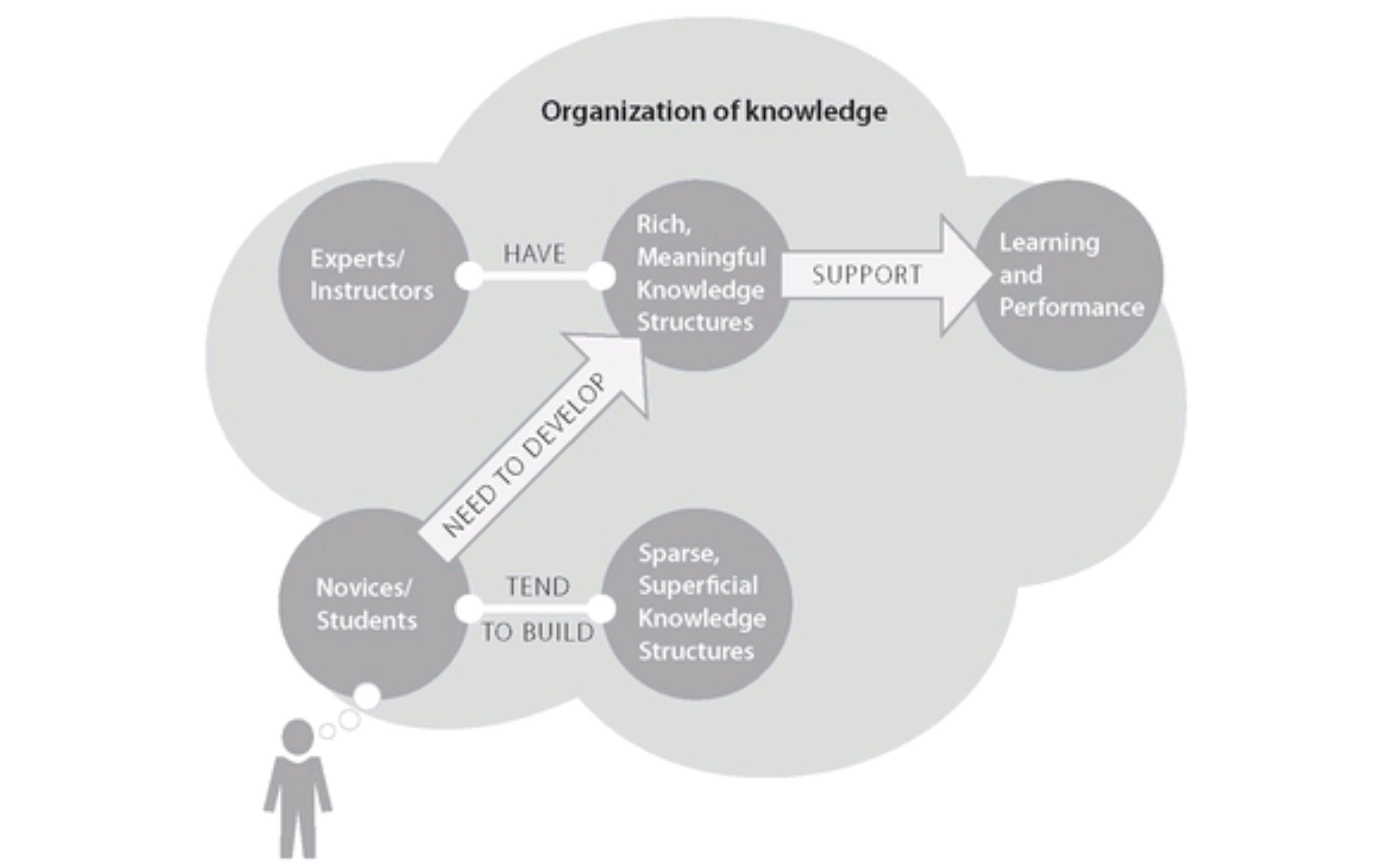
The second chapter goes into how students organize knowledge and how might a teacher build these schemas more effectively on them. It is important for the teacher to realize that students come into a new subject area with shallow understanding of how apparently unconnected peices of knowledge relate to each other. This richness of connections is one of the abilities that makes someone an expert. Therefore, the more the teacher is able to demonstrate how to build these connections and organize the information in an effective manner, the more students might learn.
“…it is not just what you know but how you organize what you know that influences learning and performance. ” (Ambrose et al., 2010)
Notes:
Chapter 1 – How Does Student’s Prior Knowledge Affect Their Learning?
Chapter 2: How Does the Way Students Organize Knowledge Affect Their Learning?
Reading:
Ambrose, S. A., Bridges, M. W., DiPietro, M., Lovett, M. C., & Norman, M. K. (2010). How learning works: Seven research-based principles for smart teaching. John Wiley & Sons.
Summary:
The first chapter illustrates how Prior Knowledge can affect learning both positively and negatively. When dealing with counterituitive concepts especially, common misconceptions that root from inacurate Prior Knowledge, are very hard to change and require time, cognitive energy, and an attentive teacher to scaffold the process. I appreciated all the methods offered to gauge, activate, recognize, and suplement Prior Knowledge as well as correct inacurate Prior Knowlege.
The second chapter goes into how students organize knowledge and how might a teacher build these schemas more effectively on them. It is important for the teacher to realize that students come into a new subject area with shallow understanding of how apparently unconnected peices of knowledge relate to each other. This richness of connections is one of the abilities that makes someone an expert. Therefore, the more the teacher is able to demonstrate how to build these connections and organize the information in an effective manner, the more students might learn.
“…it is not just what you know but how you organize what you know that influences learning and performance. ” (Ambrose et al., 2010)
Notes:
Chapter 1 – How Does Student’s Prior Knowledge Affect Their Learning?
Chapter 2: How Does the Way Students Organize Knowledge Affect Their Learning?