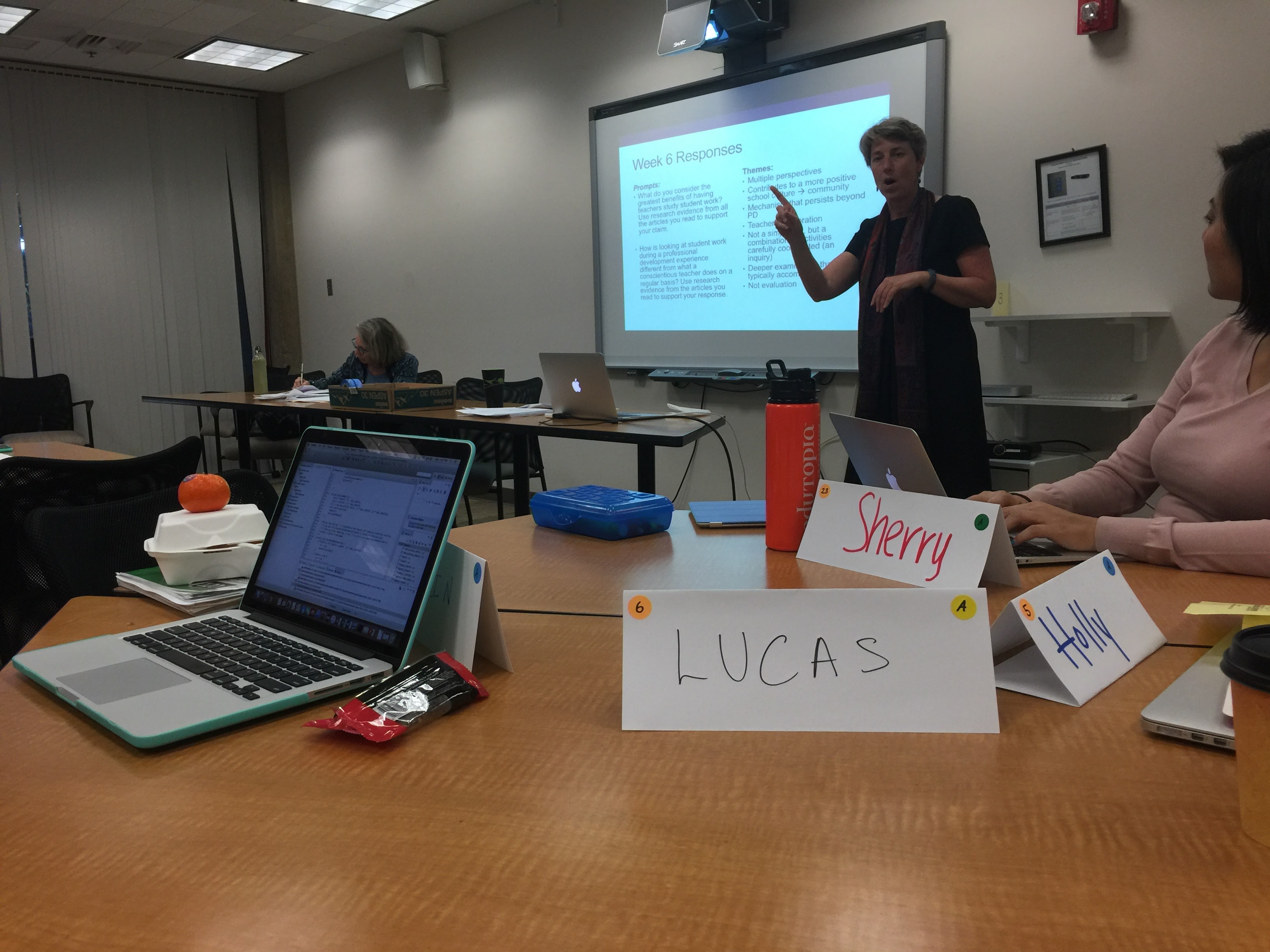
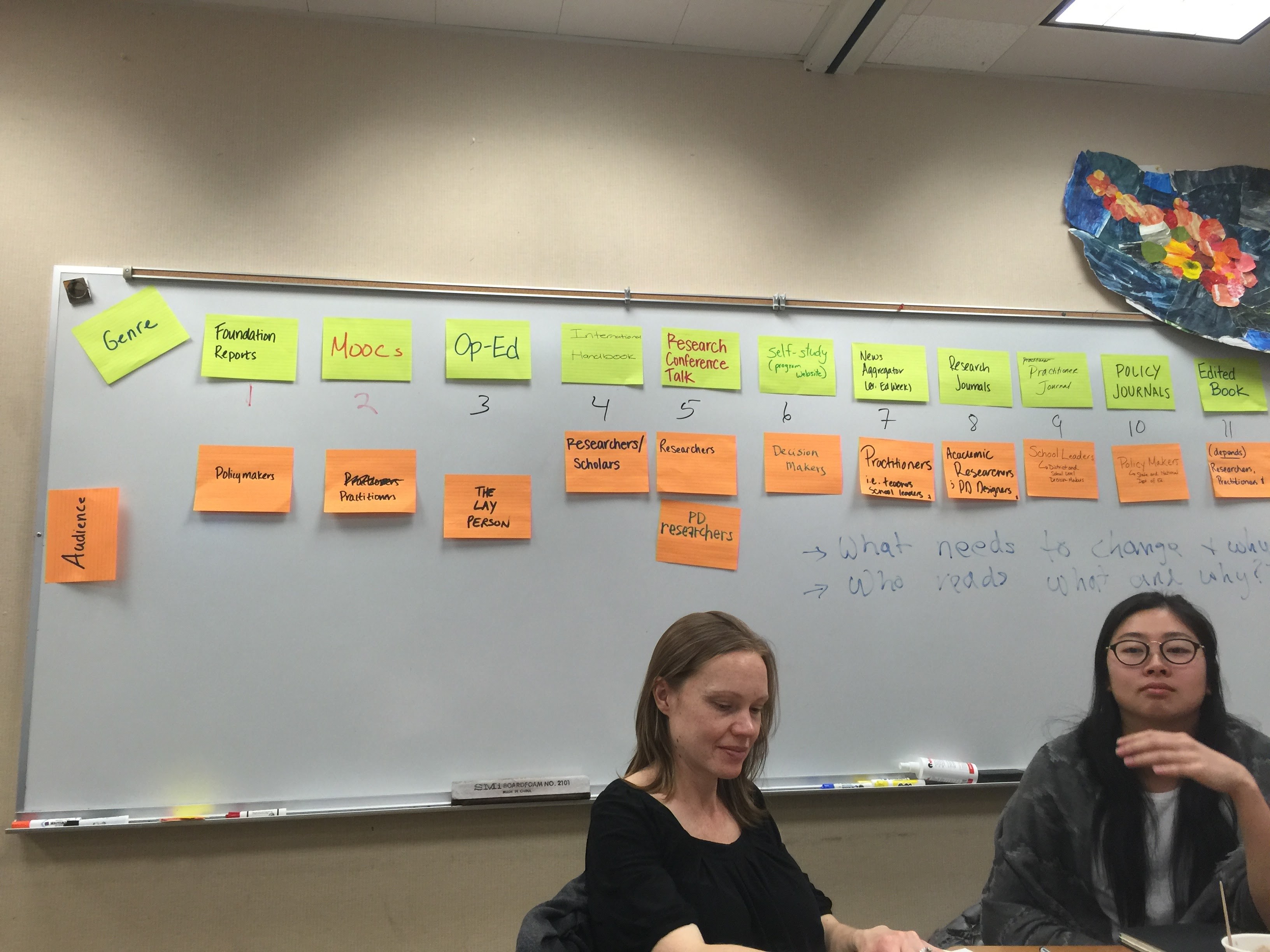
Curriculum Construction – Week 7 – Class Notes

Denise wasn’t there so the CAs Molly and Stephanie led the class very well.

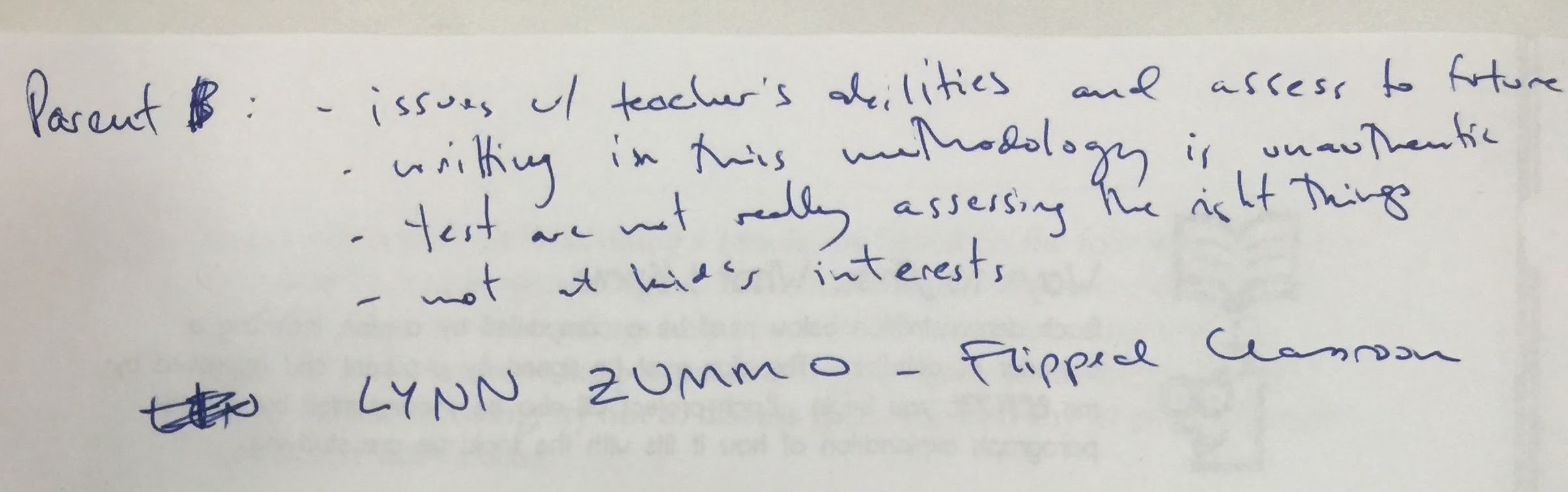
We did a Jigsaw exercise where the class was divided into their preassigned roles/lenses we did the readings with. The roles were:

  • Expert teacher
  • Novice teacher
  • Parent with a high performing student
  • Parent with a low performing student
  • School principle (my role)
  • School board member

After feeding off of each other about the issues, stances, and solutions we went into the simulation or role playing group, where one of each role was present.

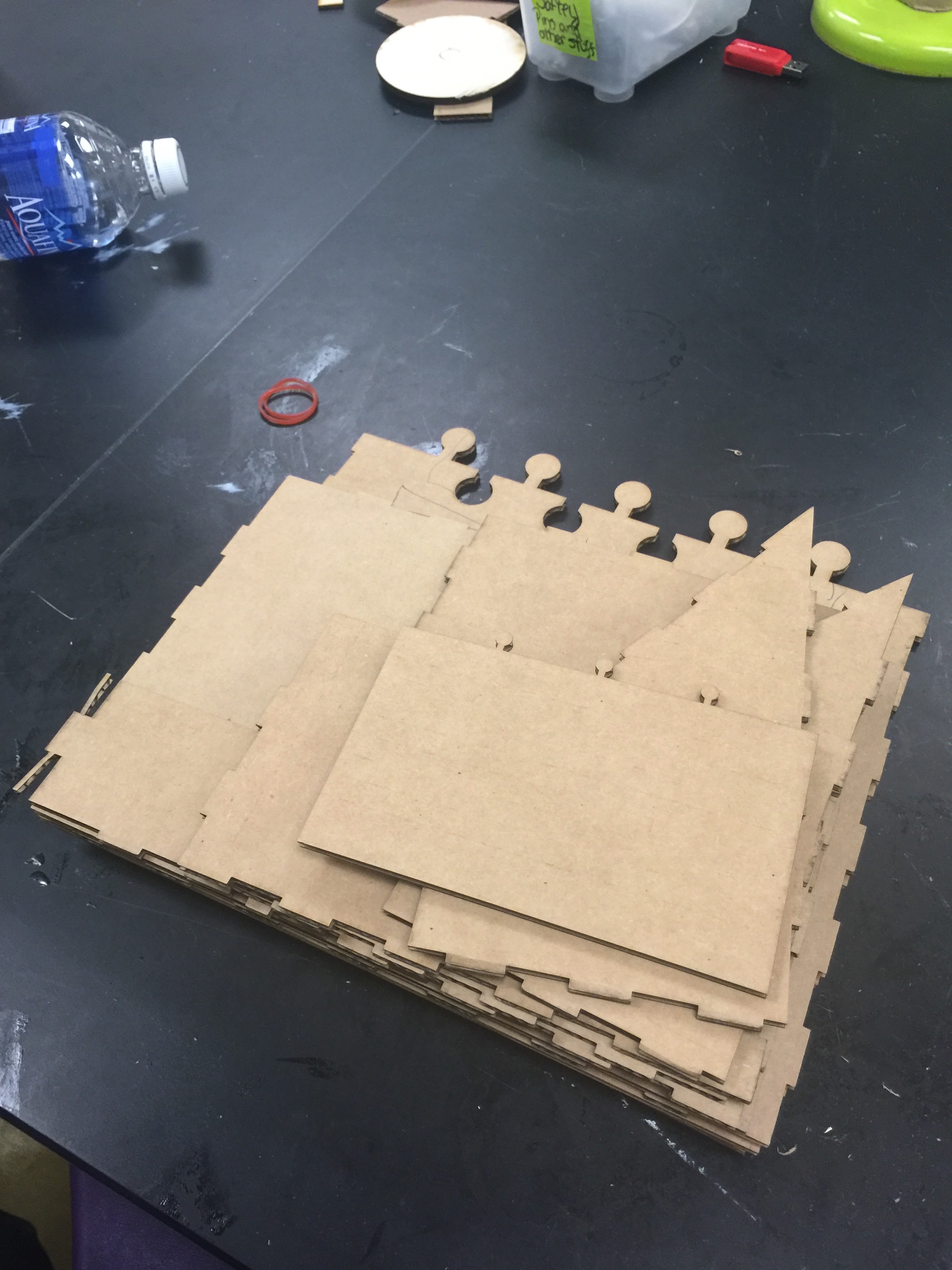
IMG_2026.JPG

IMG_2027.JPG

During the second half of the class we split into our Project Groups do have some time to get organized and define the next steps for the Curriculum Redesign Final Project.

We split the work like this:

(Lucas) – Rationale / Context
TODO: Review feedback and update

(Lucas) – Goals
TODO: Review feedback and update

(Lisa & Mohamad) Learning Activities
TODO: Do the “filtering process” → Updated Syllabus
TODO: Come up with the key learning activities

(Celine) Assessment
TODO: Figure out assessment at every level

(All) Process Log (Why)
TODO: Take photos and sum up notes


Some useful handouts:

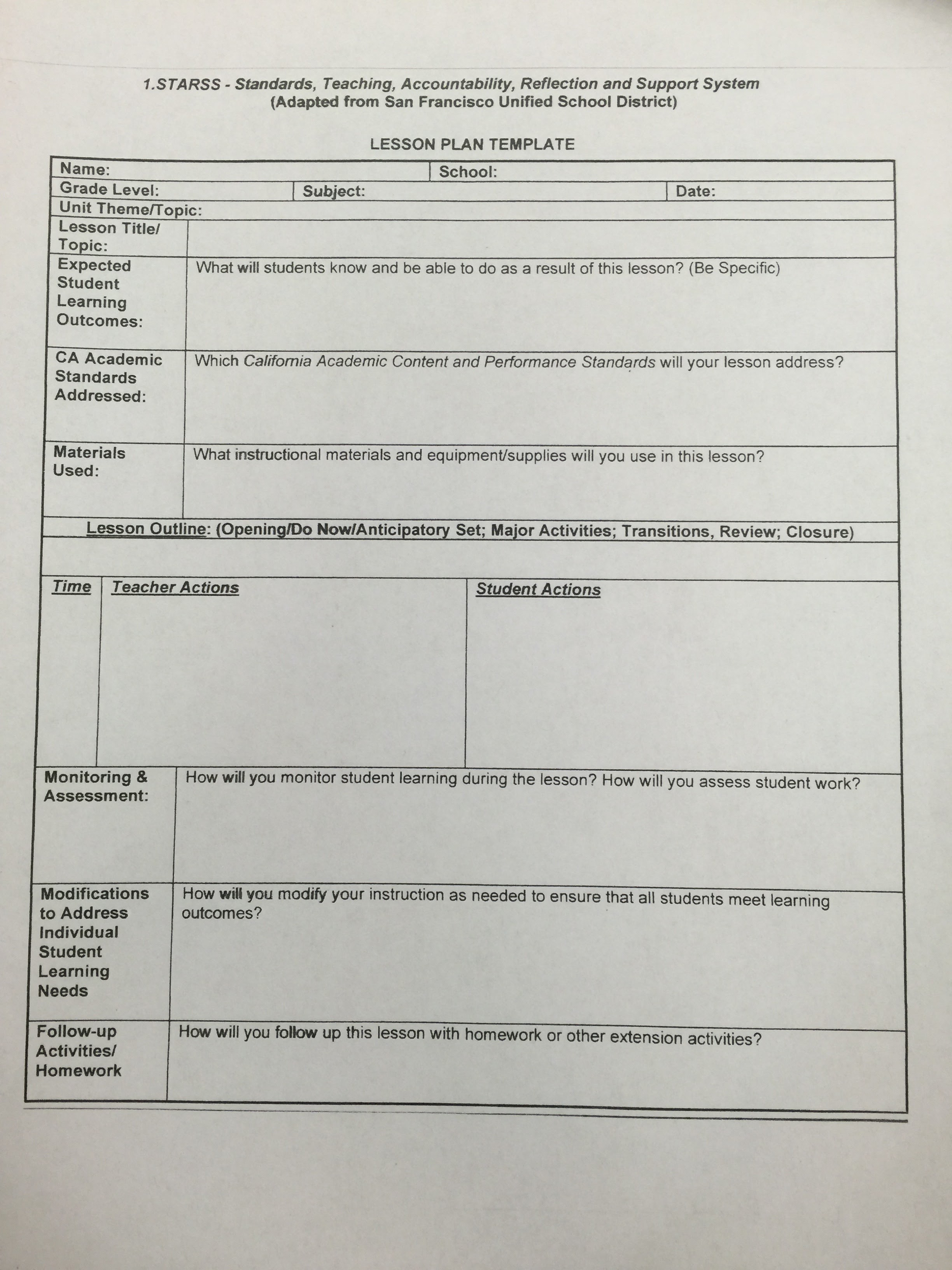
Lesson Plan Template:
IMG_2023.JPG

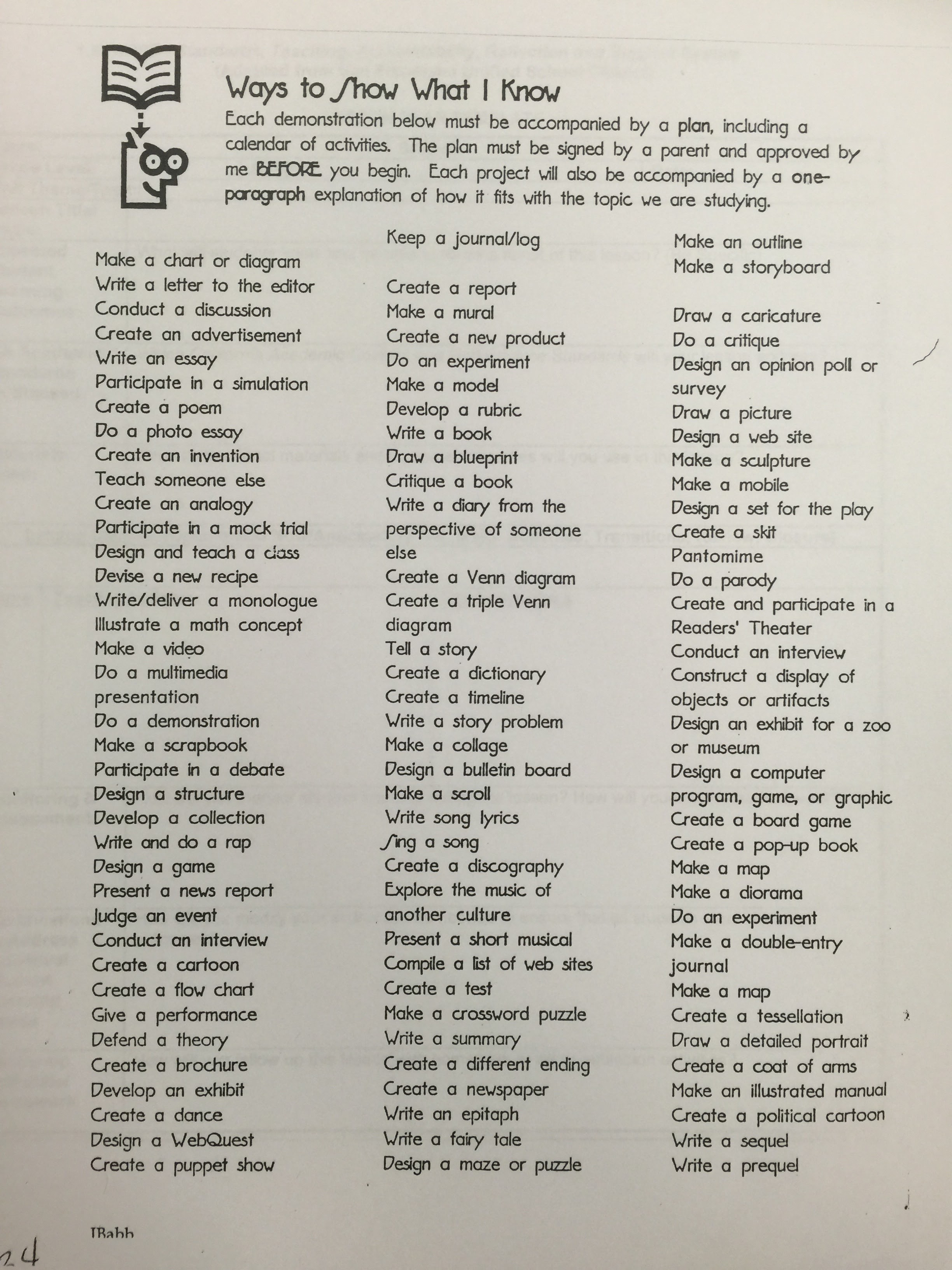
Assessment activities – Ways to Show What I KnowIMG_2024.JPG

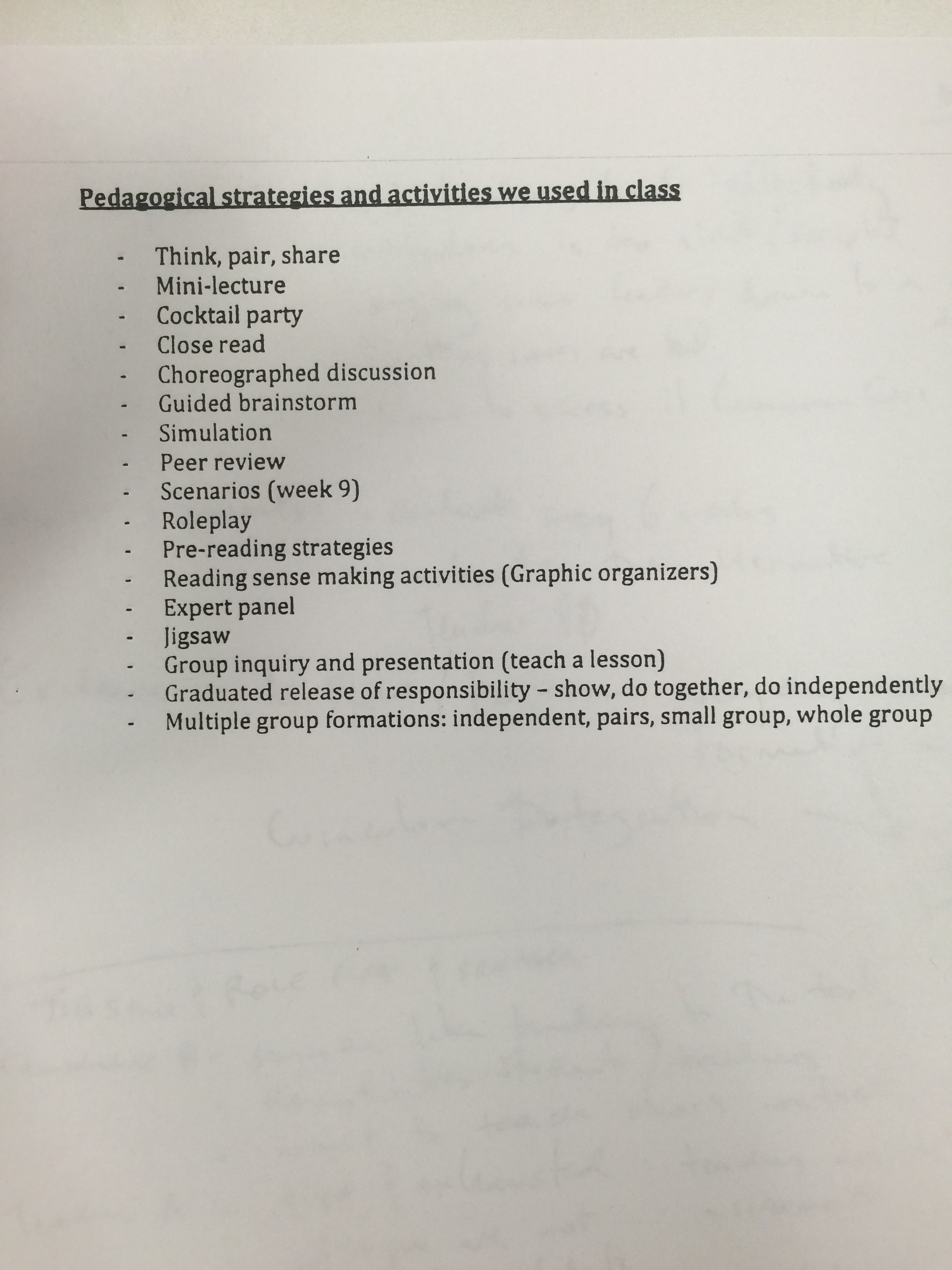
Pedagogical Moves Used in Class
IMG_2025.JPG

Curriculum Construction – Week 7 – Curriculum Critique Assignment

Curriculum Critique – tynker.com – Programming 100
Screen Shot 2016-05-11 at 3.36.29 PM

Curriculum Construction – Winter 2016 – Lucas Longo

Tynker is an online platform that aims to teach programming to children from 7 to 14 years of age or grades 1 through 8, through interactive tutorials in creating the logic for video games. Virtual characters guide the student through each challenge, showing step by step what has to be done. These challenges increase in complexity and gradually introduces new concepts and commands available in the environment. The tool is extremely attractive in term of design and flexible enough to attend to the various age groups it is intended to. An interface for teachers is also available to create lessons, register students, and assign the several lessons they offer in their course catalog. Finally, the teachers can track the student’s progress and response to quizzes presented during the challenges.

I analyzed in more detail their first programming course that introduces the basic mechanics of controlling the game such as moving a character on the screen, verifying if a character is touching another object and react accordingly, and the concept of repetition or loops. The student must drag and connect instruction ‘bubbles’ that will create a chain of commands the character will perform once the ‘play’ button is pressed. If the commands are correctly positioned, the goal is reached and the student progresses to the next challenge. At the end of each lesson a short multiple-choice quiz is presented to the student to ensure that some basic concepts and terminology were understood.

Nowhere in the website there is an explicit declaration of what particular curriculum ideology they based their design. The nature of the interactions and affordances provided by the tool show that there is very little presentation of underlying concepts, but the immediate engagement with acting upon, using, and testing their instructions. One might argue that several ideologies are present in the curriculum – which includes the technological tools, the nature of the challenges, and ways of engaging with the concepts. “If you are going to teach a kid to swim, put them in a swimming pool” – Dewey’s constructivist concepts and the project based learning methodology is evident. The challenges also move on a clear learning progression offering the students a very scaffolded continuity of experiences that build upon each other and provide the basic concept that the student will need in subsequent ones.

“From this point of view, the principle of continuity of experience means that every experience both takes up something from those which have gone before and modifies in some way the quality of those which come after.” (Dewey, 1938, p.35)

Cognitive Pluralists would argue that the subject matter itself, programming, taps into one of our innate abilities. “As a conception of knowledge, Cognitive Pluralism argues that one of the human being’s distinctive features is the capacity to create and manipulate symbols.” (Eisner, 1994, p.79) It is also a very practical activity where you learn by doing.

“Its meaning has shifted from a noun to a verb; intelligence for more than a few cognitive psychologists is not merely something you have, but something you do.” (Eisner, 1994, p.81).

Another powerful concept the curriculum exhibits with its video-game based interface and activities, Nodding’s (1992) care framework describes why students might engage with the content.

“We need a scheme that speaks to the existential heart of life – one that draws attention to our passions, attitudes, connections, concerns, and experienced responsibilities.” (Noddings, 1992, p.47).

I believe that we can make a generalization nowadays that children are fascinated by video-games and thus might find it relevant and interesting to design their own games. In the process, they are exposed to the concepts of programming, video game creation, and even design, once they start customizing their characters and game environments.

The implicit assumption of this curriculum is that programming is an important skill to learn for the future. Explicitly, the curriculum matches several Common Core Mathematics, Common Core ELA, and CSTA Computer Science standards that students develop in each lesson. Clear charts map lessons to Common Core standards by grade. Through their lessons/activities, students are able to learn and explore several Math and English Language concepts. The company has several courses beyond the Programing one I explored that include English, Science, and Social Studies projects. Each course contains several lessons, exercises, and activities the students can complete.

The design of the lessons are such that teachers do not have to a deep knowledge of programming to use it. As their website (tinker.com, 2016) puts it, “Built for Educators. No Experience Required.”  since their “Comprehensive Curriculum” has “Ready-to-use lesson plans and STEM project templates for grades K-8.”  The requirement for using this curriculum is one computer or tablet per child and an internet connection. Even though this might not be a reality in all schools, I believe it is a matter of time that the “1 laptop per child” dream to come true. In any case, the site also provides challenges for students to complete on their own computer or tablet, in the case the school might not provide adequate access. In other words, parents could use this site/curriculum to encourage their children to engage with programming.

The lessons provided are all geared clearly towards and support the intended goals and learning activities. For example, to introduce concepts of angles, the student has to program a spaceship to trace the lines of a star by giving it commands to go forward, turn at a certain angle, and repeat the process again until the star is complete. I felt that an explanation on how to figure out how many degrees each turn should be depending on how many points a star has was missing. The aim of the activity was to introduce the concept of loops and was intended for a second grader, therefore it might have been by design that they left out this explanation. I would have to pay and get access to the more advanced lessons to find out how they introduced such derivations – which apparently are present in the organized course catalog.

The assessment tool presents in a clear manner how students are progressing through the activities. A chart indicates the learning outcomes per student with icons indicating their speed and accuracy in completing each task. I was not able to have access to actual assessment tool which made me curious about how detailed these assessment results are. I would like to know if the teacher could see which exact questions the students got wrong. My guess is that it does provide it simply because of how carefully and throughly thought through the tool is implemented.

One unintended consequence I foresee in implementing this tool in the classroom is that younger students might get distracted with the character customization capabilities the tool offers. I’ve seen this happen firsthand when teaching using Scratch, a similar tool which this one bases it’s block programing style. Students end up spending a significant time playing with the color of the hair, clothes, and other such customizations instead of attending to the task at hand. The tool though, cleverly limits what the student can do in each exercise and establishing a time limit when customizing the characters. Only in more advanced lessons can the students more freely engage with all the features the tool offers.

If we apply Wiggins & McTighe’s (2005) WHERETO evaluation of learning activities, one could say that the tool attends to them all:

W = help the students know Where the unit is going and What is expected.

The lessons have clear goals and measures of success.

H = Hook all students and Hold the interests

I was actually entertained by the challenges presented and attracted by the design of the scenarios and characters.

E = Equip students, help them Experience the key ideas and Explore the issues

The interactive nature of the challenges do provide a rich tool to attend to these criteria.

R = Provide opportunities to Rethink and Revise the understandings and work

The challenges themselves provide opportunities to redo and revise their programs in order to achieve their goals.

E = Allow students to Evaluate their work and its implications

The evaluation of the work comes directly from attaining the goals therefore the feedback is immediate. The quizzes also provide an opportunity for the students to evaluate what they have learned and reflect upon them, even if on their own.

T = Be Tailored (personalized) to the different needs, interests, and abilities of learners

The different lessons attend to different levels and abilities the students might have and the tool is flexible enough to allow students to go as far as they wish with their programming explorations.

In conclusion, I was very impressed with the quantity, quality, and breadth of the tool. The introductory lessons are easy enough and scaffolded enough for the ages it is intended to. There is a high ceiling as well in the sense that you can move from block-based programming to actual programing in Java and connecting to robots to enhance the tangibility of the learning experience.

“The artistry in pedagogy is partly one of placement – finding the place within the child’s experience that will enable her to stretch intellectually while avoiding tasks so difficult that failure is assured.” (Eisner, 1994, p.70)

References

Dewey, J. (1938/1997). Experience and Education. New York: Simon & Schuster.

Eisner, E. (1994). The Educational Imagination: On the Design and Evaluation of School Programs. (3rd. Edition). New York: MacMillan. pp. 47-86.

Noddings, N. (1992). The Challenge to Care in Schools. New York: Teachers College Press.

Wiggins, G., & McTighe, J. (2005). Understanding By Design. (Expanded 2nd edition) Alexandria, VA: Association for Supervision and Curriculum Development.
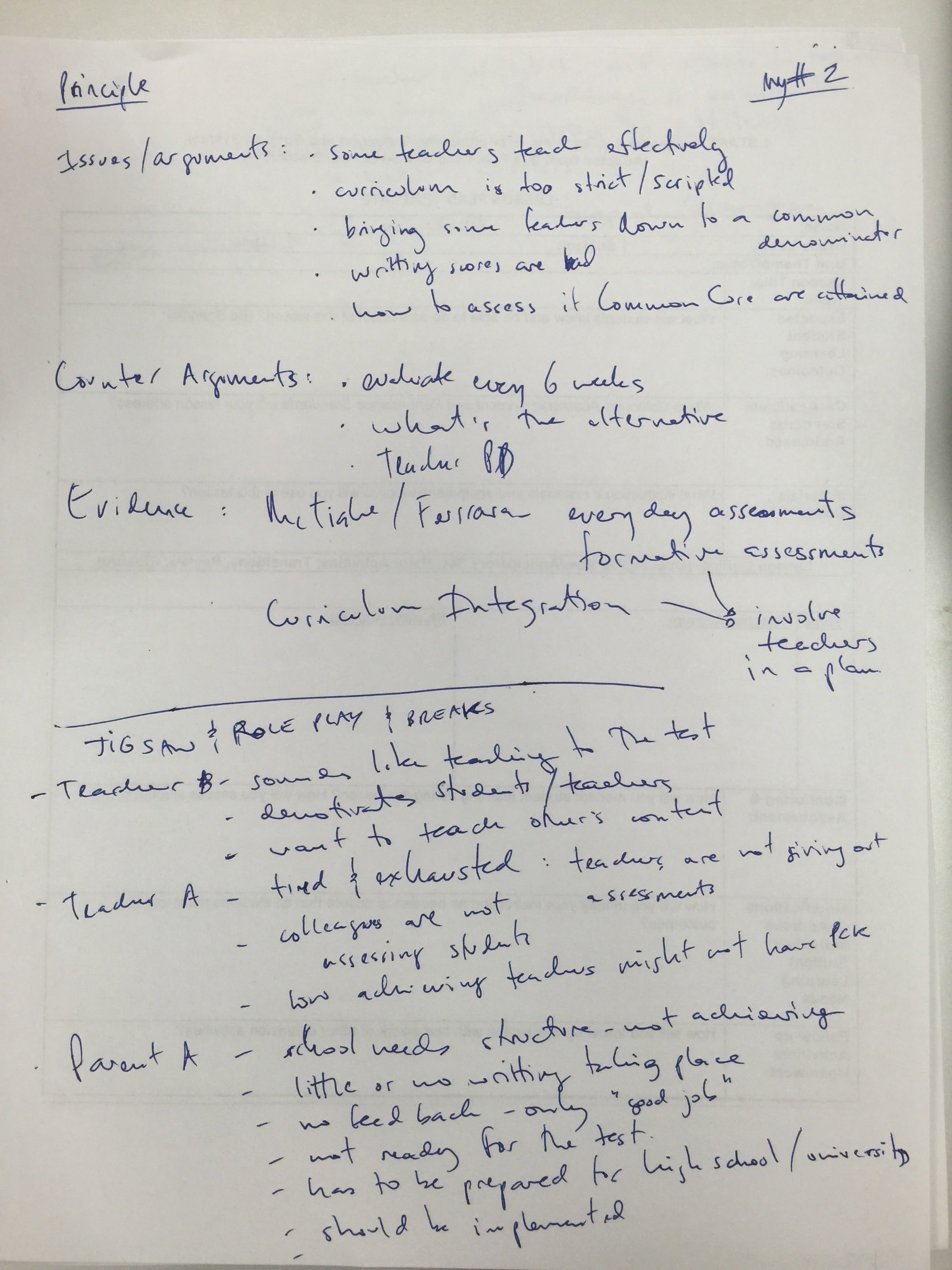
LDT Seminar – Master's Project Feedback

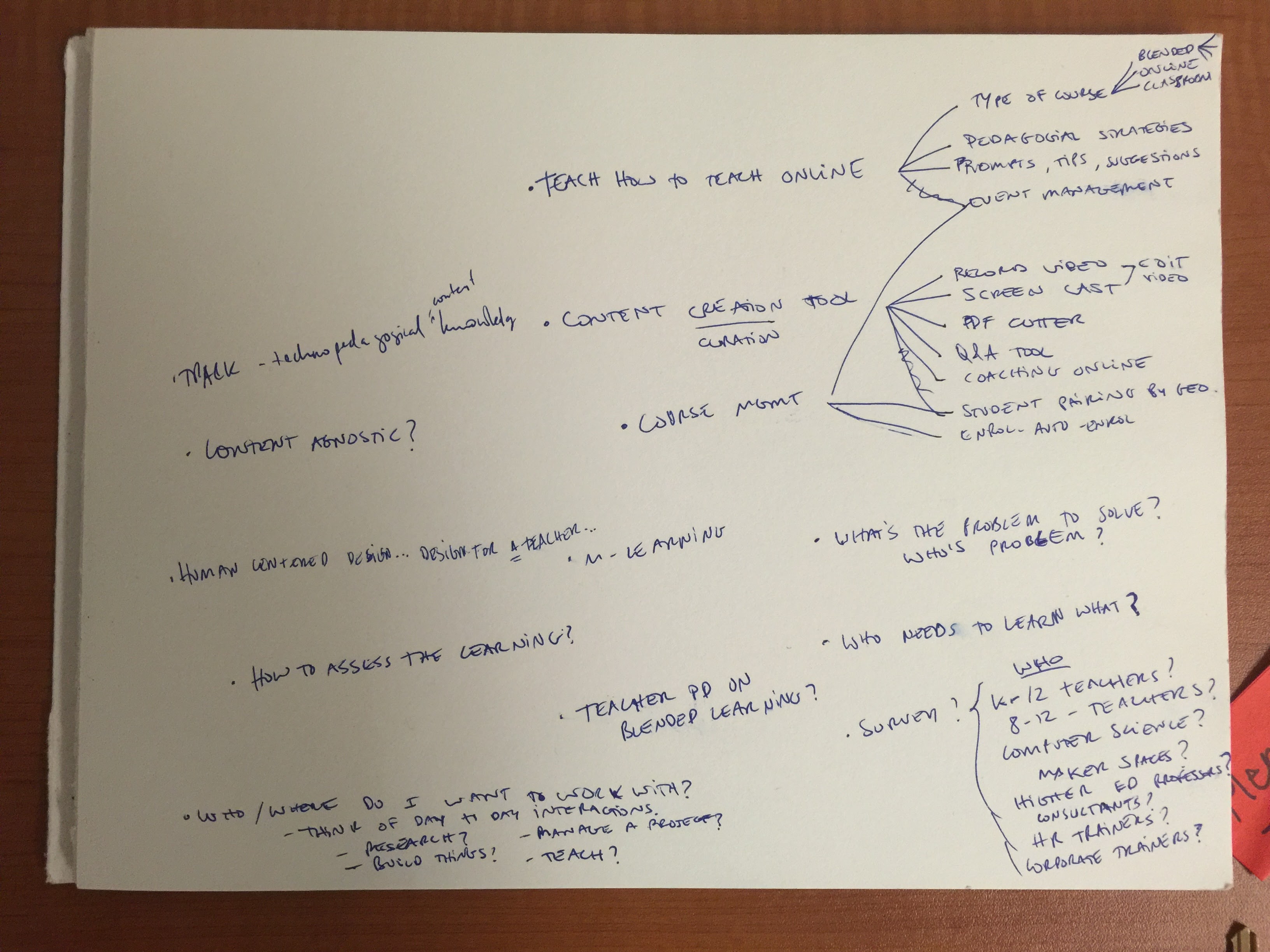
Got some good feedback today about my Master’s Project:

  • Look at StickyUnit
  • Focus on a content area
  • Talk to John Willensky – making research public

  • Think about what kind of higher ed

  • Skillshare vs Udemy

  • Qualtrix – heat maps

  • Survey: Not going to be published, confidential, where is it going to be published?Informal pilot testing, not formal research paper.

TO DO:

  1. Create email for Udemy teachers
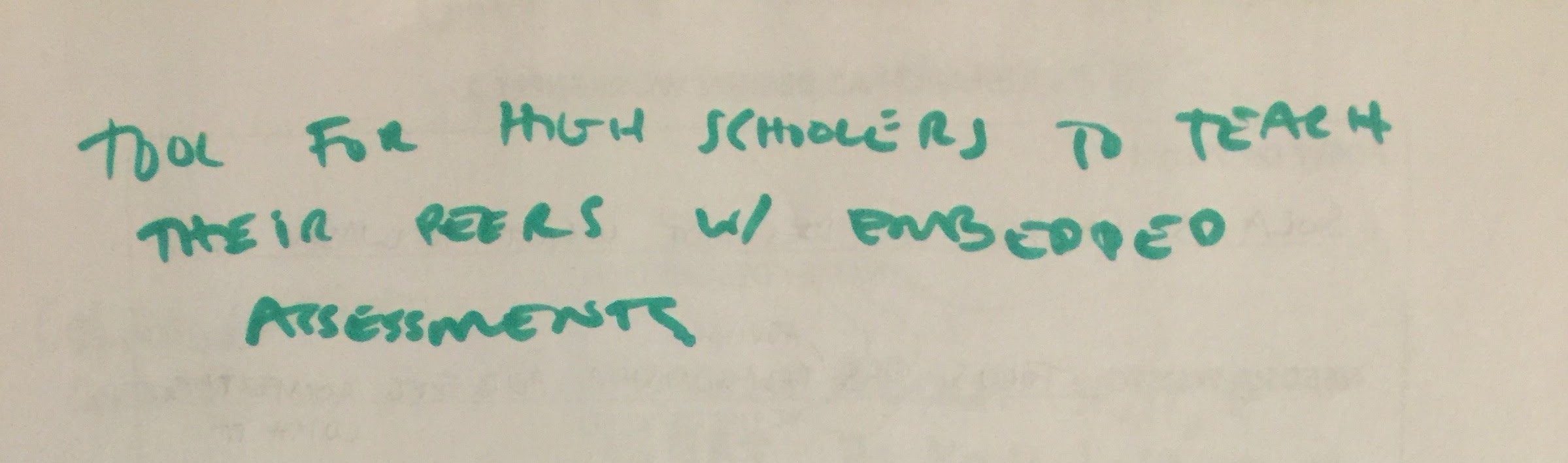
  2. Create survey for teachers
  3. Send all iOS teachers from Udemy

Survey Questions:

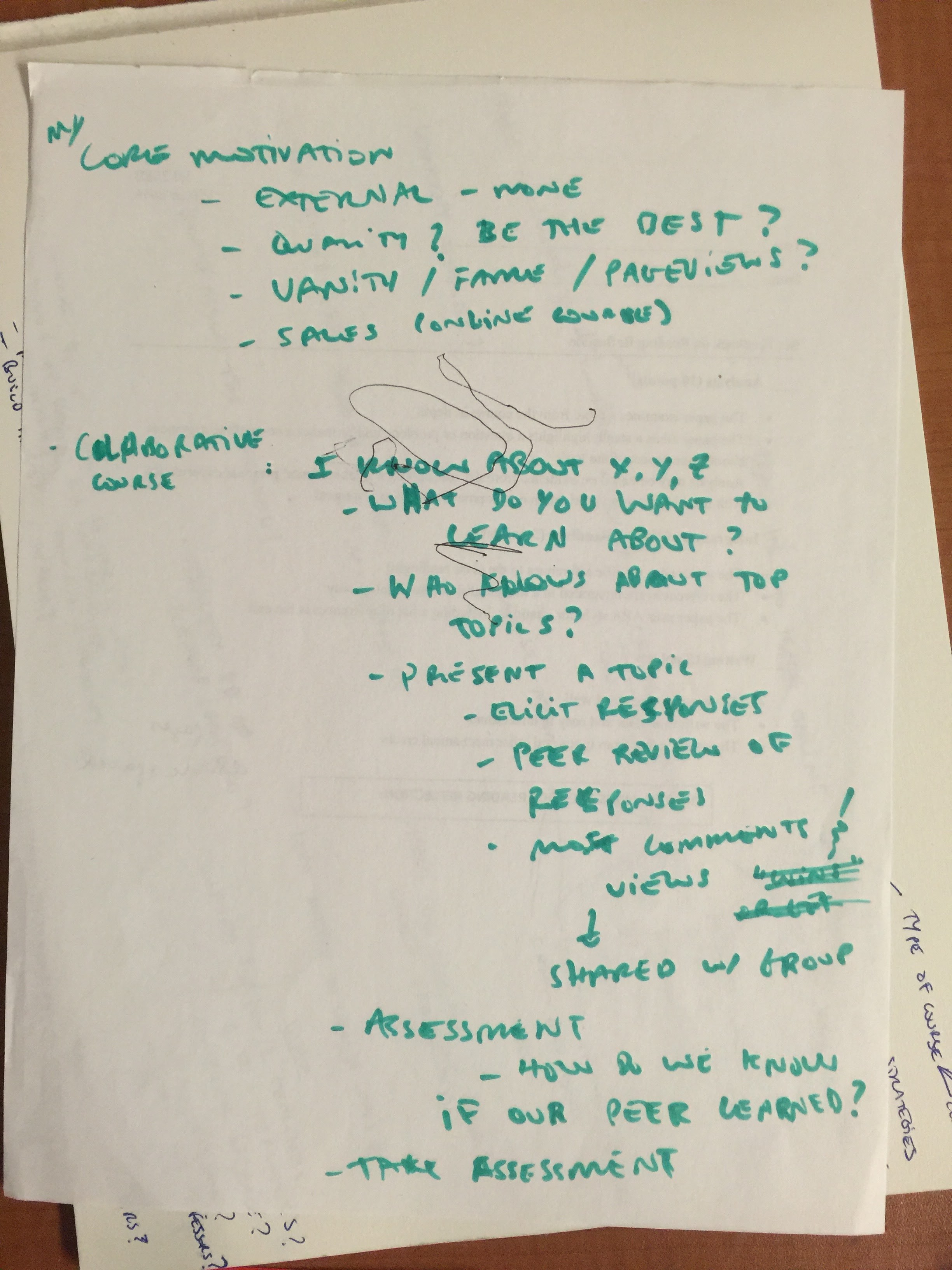
  1. Besides teaching online what is your teaching experience or background ?
  2. How many online courses have you already published?
  3. What is your core motivation to publish your content online?
  4. Did you take the course on creating a course? How useful was it?
  5. What were the main challenges in creating the online course?
  6. What do you feel is missing in the online platform that would help you create a better course?
  7. Did you feel the need to have someone helping you in the process?
  8. If you were to add any features to the content the location tool, what would they be?
  9. If you were to redo your online course what would you do differently?
  10. How did the students’ questions and comments inform you about ways to improve your course?
  11. Any further suggestions or comments?

Beyond Bits and Atoms – Week 6 – Reading Notes

Blikstein, 2015. Computationally Enhanced Toolkits for Children: Historical Review and a Framework for Future Design, Stanford University, USA

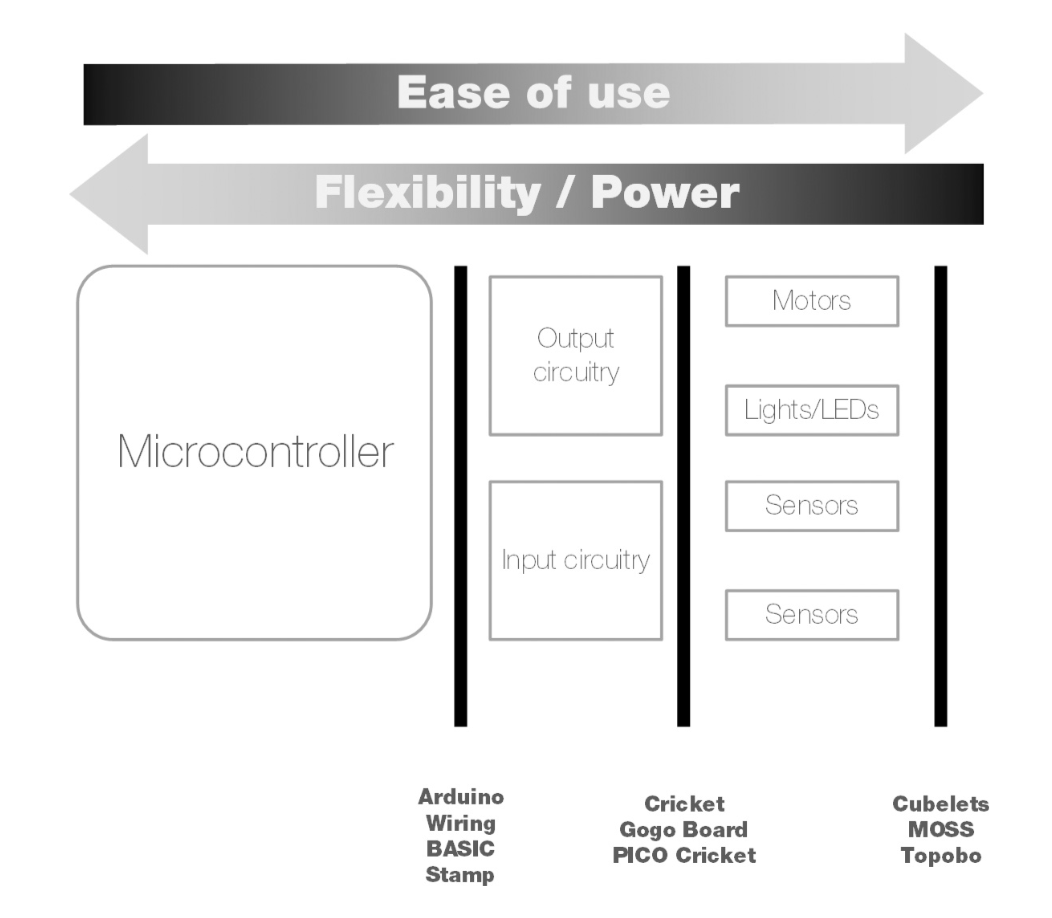
The generations of microcontrollers

  • The first generation: Pioneers of physical computing (LEGO/Logo, Braitenberg Bricks, and Programmable Bricks)
  • The second generation: Conquering the World (Crickets,Programmable Bricks, and BASIC Stamp)
  • The Third Generation: Broadening Participation and Accessing New Knowledge Domains (GoGo Board, Phidgets,Wiring,andArduino)
  • The Fourth Generation: New form factors, new architectures, and new industrial design (Pico Cricket, Lilypad, Topobo, Cubelets, LittleBits)
  • The Fifth Generation: Single board computers (RaspberryPi, PCDuino, BeagleBoard)

Screen Shot 2016-02-11 at 10.38.31 AM.png

  • Selective exposure for usability: Embedded error correction
  • Selective exposure for power: Tangibility mapping
  • “The main construct proposed in this monograph (selective exposure) and its two subcategories (embedded error correction and tangibility mapping) could help understand the use of current products and give designers a framework to imagine new ones.” (Blikstein, 2015)

Horn, M. S. (2013, February). The role of cultural forms in tangible interaction design. InProceedings of the 7th International Conference on Tangible, Embedded and Embodied Interaction(pp. 117-124). ACM.

In this paper I have proposed an approach to tangible interaction design that looks beyond physical analogies and universal sensorimotor experiences. Specifically, I have argued that designers can purposefully evoke cultural forms as a means to activate existing patterns of social activity along with associated cognitive, physical, and emotional resources. This approach to design was inspired by the notion of social and cultural funds of knowledge [8, 18] and by Saxe’s form-function shift framework [30, 31]. Using three examples I demonstrated what this might look like in action.”


Curriculum Construction – Week 6 – Reading Notes

Banks, J. (1993). The Canon Debate, Knowledge Construction, and Multicultural Education. Educational Researcher, 22(5), pp. 4-14.

  • Dominating groups
    • Western traditionalists
    • Multiculturalists
    • Afrocentrism
  • Polarized debate, primarily in popular press, no productive interactions
  • Positionality – started with feminist movement
    • “Positionality reveals the importance of identifying the positions and frames of reference from which scholars and writers present their data, interpretations, analyses, and instruction (Anzaldúa, 1990; Ellsworth, 1989).”, (Banks, 1993, p. 5)
  • Five types of knowledge
    • Personal/cultural knowledge
    • Popular knowledge
    • Mainstream academic knowledge
    • School knowledge
  • The rules of power
    • “Delpit (1988) has stated that African American students are often unfamiliar with school cultural knowledge regarding power relationships. They consequently experience academic and behavioral problems because of their failure to conform to established norms, rules, and expectations. She recommends that teachers help African American students learn the rules of power in the school culture by explicitly teaching them to the students.” (Banks, 1993, p.7)
  • From academia to the classroom – takes time
    • “Consequently, school knowledge is influenced most heavily by mainstream academic knowledge and popular knowledge. Transformative academic knowledge usually has little direct influence on school knowledge. It usually affects school knowledge in a significant way only after it has become a part of mainstream and popular knowledge.” (Banks, 1993, p.11)

Sleeter, C. (1996). Multicultural Education as Social Activism. Albany, New York: State University of New York Press. pp. 91- 115.

  • Multiculturalism as a form of dialogue and acceptance of several points of view
  • Curricula often attempt to include/induce minorities into the dominant’s culture
  • “Oppressors” say that all the differences have been ‘resolved’ in order to maintain status quo
  • Move away from trying to integrate towards discussing and understanding the different

Eisner, E. W. (1993). Forms of understanding and the future of educational research. Educational researcher, 22(7), pp. 5-11.

  • Representations of meaning
    • “Representation, as I use the term, is not the mental representation discussed in cognitive science (Shepard, 1982,1990)but, rather,the process of transforming the contents of consciousness into a public form so that they can be stabilized, inspected, edited, and shared with others.” (Eisner, 1993, p.6)
  • New forms for new understandings – but how to assess these multiple forms that go beyond text and numbers?
  • Must explore
    • “Working at the edge of incompetence takes courage.” (Eisner, 1993, p.10)

Gardner, H. (1999). The Disciplined Mind. New York: Penguin Books. pp. 186-201, 208-213.

  • Enhance understanding by:
    • Providing powerful points of entry
      • Narrative entry points
      • Numerical entry points
      • Logical entry points
      • Existential/foundational entry points
      • Aesthetic entry points
      • “Hands-on” points of entry
      • Interpersonal points of entry
    • Offering apt analogies
      • Powerful analogies and metaphors
    • Providing multiple representations of the central or core ideas of the topic
  • Issues
    • How does one orchestrate the three approaches to important ideas?
    • How does one spread this orientation to the rest of the curriculum – and with might the limitations be?
    • How does one assess the success of such an approach?
    • How might this approach be misunderstood?
    • In the end, what is the status of the true, the beautiful, and the good, and of their possible interconnections?
  • Possibilites and limits
    • Mensures of success
    • Possible misunderstandings of the approach
    • Once more: the true, the beautiful, and the good

Curriculum Construction – Week 6 – Reading Reflection 2 Assignment

“Whether it comes after teaching, while teaching, or by teaching, we often think of assessment as something done to students, not with them.” (Coffey, 2003, p.76)

The word “assessment” is often thought of as the final grade on the report card or as standardized tests that simply rank or classify the student. What it should be thought of is an opportunity for learning and an integral part of classroom activities. In an evolved, mature, and structured teacher-student dynamic, students can create their own quizzes or exam questions, engage in reflections upon their peers presentations or projects, and even grade each other’s tests. The idea might sound radical yet the benefits might outweigh the extra work and planning it might take to ‘flip’ assessment. Being able to understand what quality work is, analyze your own work, receive feedback and act upon it, is a valuable life-long skill.

“When students play a key role in the assessment process they acquire the tools they need to take responsibility for their own learning.” (Coffey, 2003, p.77)

One of the main purpose of assessment is for external accountability but it’s best application might be to improve student motivation, curiosity for learning, and to improve the teacher’s efficacy. It is primordial for students to understand the purpose of their own education and to feel responsible for it. Exposing the students to how they will be assessed and what the enduring understandings the courses will bring to them gives them a sense of purpose of their education. Not knowing why you should learn math or science transforms the whole learning experience meaningless. This disconnect is minimized when the teacher starts by involving the students in creating measures and activities that will demonstrate their understanding of what the course is all about.

“Through the students’ explicit participation in all aspects of assessment activity, they arrived at shared meaning of quality work. Teachers and students used assessment to construct the bigger picture of an area of study, concept, or subject mater area.” (Coffey, 2003, p.78)

To apply this in a classroom requires a significant change in teaching practice. It might feel that engaging the students in everyday assessment practices takes precious time out of regular ‘content-coverage’. Yet this very engagement creates for the students, connections between content and demonstration of knowledge, between their own work and what quality work looks like. It might even make the teacher’s work easier in the sense that the students create their own tests and even grade their own work. They also provide feedback to their peers during presentations and in the process are learning by engaging with the material.  Buy-in from school administrators also should be easy since you can actually use traditional assessments in this process. The topic of large scale assessment in itself is an interesting topic students should be aware of, understand the reasons why they exist, and reduce the stress involved in test taking; but I digress.

So how might you apply this concept in practice? Coffey’s concept of “everyday assessment” fits in well with Wiggins and McTighe’s (2005) Understanding by Design process. The main twist or difference would be that the process of determining acceptable evidence of student understanding would not be done in isolation, but with the students. The teacher would obviously have to provide the course’s goals and essential questions but will do so in a manner that students understand why it is important to their lives (present and future) and how will they know if they actually learned the content.

“Despite initial resistance, as students learned assessment-related skills, demarcations between roles and responsibilities with respect to assessment blurred. They learned to take on responsibilities and many even appropriated ongoing assessment into their regular habits and repertoires.” (Coffey, 2003, p.86)

The process is not easy and it takes time but it provides a sense of clarity for the teacher when planning a course or a lesson. It’s not about the content that has to be delivered, it’s about creating mechanisms that demonstrate student’s learning. It’s about reviving that child’s desire to show-off to their parents what they have just accomplished. It’s about knowing what your parents expect of you and creating a relationship that is based upon growth.

References

Coffey, J. (2003). Involving Students in Assessment. In J. Atkin & J. Coffey (Eds.) Everyday Assessment in the Science Classroom. Arlington, VA: National Science Teachers Association. pp. 75-87.

Wiggins, G., & McTighe, J. (2005). Understanding By Design. (Expanded 2nd edition) Alexandria, VA: Association for Supervision and Curriculum Development. pp. 13-34, and 105-133.
Brazilian Education – Week 6 – Class Notes

Robert-Evan-Verhine.jpg

Today we talked about how education is financed in Brazil and the National Education Plan lead by Bob Verhine (Universidade Federal da Bahia).

Basically Brazil spends quite a bit in education in absolute terms but per-student spending is ridiculously low.

The plan has 20 goals which are for the most part unatainable, vague, and/or non-descriptive. The focus seems to be to please all sides, be neutral, and avoid controversy.

Many policies and laws established in our Constitution for example, have never been put into practice…

Here are some points about the challenges to increase expenditures in brazilian education.

Teacher PD – Week 6 – Class Notes

IMG_1973.JPG

Jigsaw exercise

Science Readings – Group 2
Audience – Teachers

Conceptual framework

  • STeLLA Conceptual Framework
    • Student Thinking
    • Science Content Storyline
  • Deepen content knowledge + STeLLA framework
  • Theory of teacher learning
    • “Theory of teacher learning. The program design was guided by a situated cognition theory of teacher learning and a cognitive apprenticeship model of instruction that view learning as naturally tied to authentic activity, context, and culture (Brown, Collins, & Duguid, 1989; Lave, 1988).”
  • Theory of science teaching and learning
    • “Theory of science teaching and learning. The STeLLA program is based on a constructivist, conceptual change view of science teaching and learning that focuses on making student thinking visible so that instruction can be responsive to students’ emerging ideas, understandings, and confusions and thus support them in developing understandings of science concepts and phenomena that genuinely make sense to them (not just memorized words) “

With regard to our primary research question about program effects, we observed that students whose teachers experienced content deepening integrated with analysis-of-practice in their professional development program (i.e., STeLLA) reached higher levels of science achievement than did students whose teachers received content deepening alone.”

Control group was called comparison group

How did it influence:

  • Research question
    • Content embedded within practice
  • PD Design
    • Center around videos and artifacts
    • Inquiry based
    • Social constructivist where the group comes up with explanation
    • Link science content & pedagogy
  • Research Design

Most important to share?

  • How to do it

What doesn’t matter?

  • Statistics

*****************

PD for teacher

Math

  • Grounded on the content of the PD – algebraic reasoning
  • Student thinking
  • Addressing content knowledge
  • Focus on one key idea
  • On site support

IMG_1975.JPG